








Beautiful city Baltimore!
Welcome to my homepage!
I am Subhendu Chakraborty, a Computational Materials researcher with extensive experience in Nonlinear Finite Element Analysis(FEA), Molecular Dynamics(MD), Crystal Plasticity(CPFE), Phase Field(PF), multi-scale and multi-physics models, plastic deformation analysis, fracture, and failure analysis in metals and alloys.
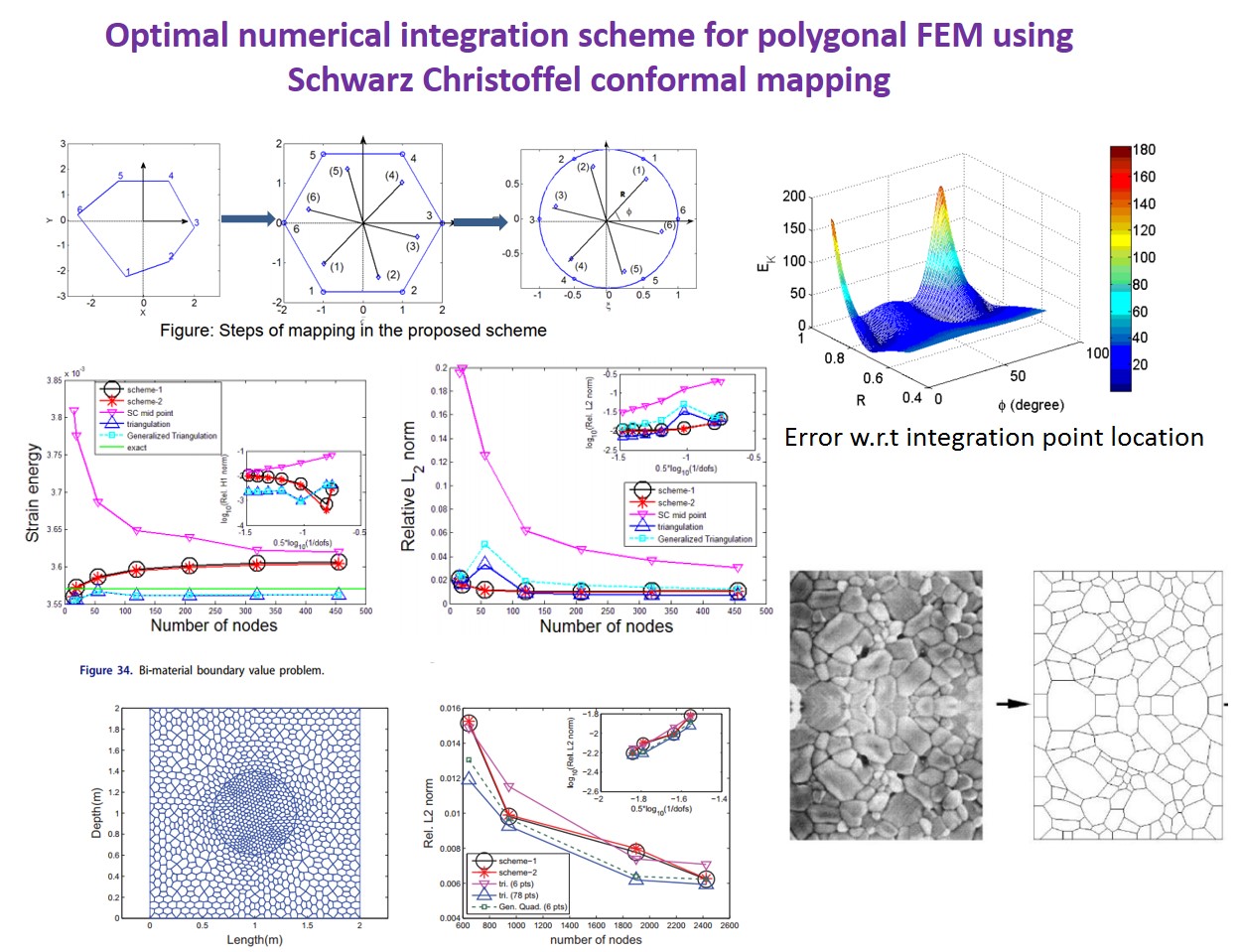
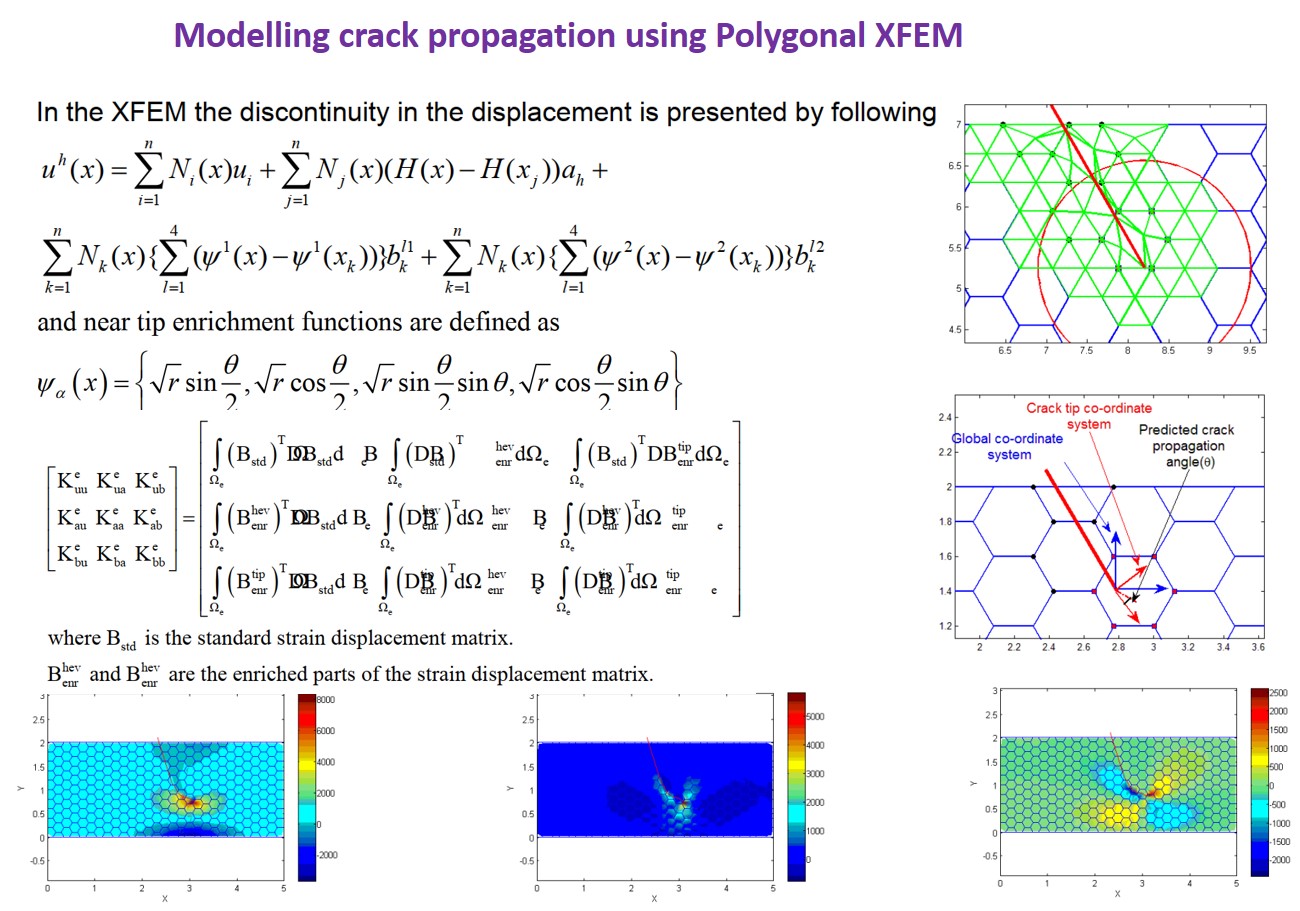
Computational/Analytical: | Multiscale Modeling (MD–CPFE Coupling), Nonlinear Finite Element(FEA), Crystal Plasticity(CPFE), Phase Field(CPFE-PF), Molecular Dynamics(MD, Time-accelerated MD), Meshless Methods(SPH, RKPM), Polygonal FEM, XFEM. |
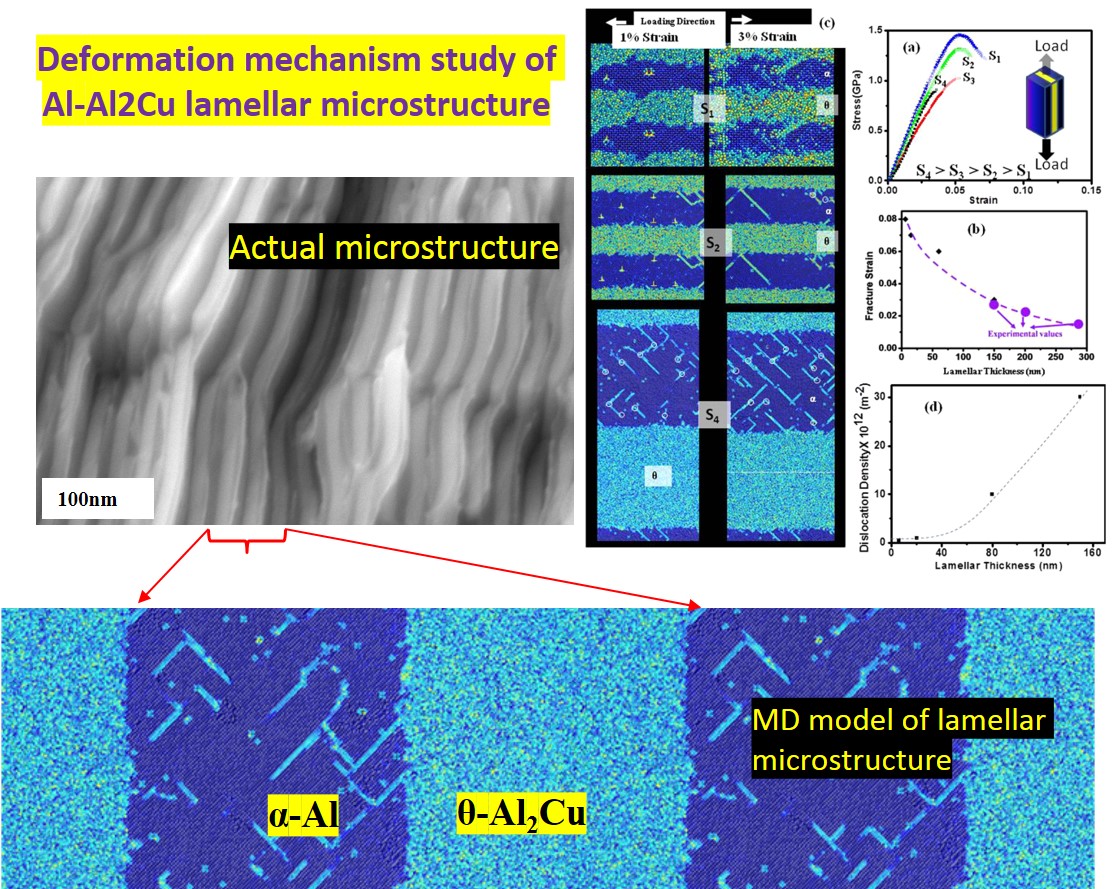
Application: | Fracture and failure in Metals and Alloys. Plastic Deformation Mechanisms and Strengthening Mechanisms in High-Entropy Alloys(HEA) and Refractory Complex Concentrated Alloys(RCCAs). Additive Manufacturing(AM) of Metals and Alloys. |
Programming skills: | C++, FORTRAN, Python, Object Oriented Programming. Parallel Programming using MPI protocol. Debugging using GDB, Totalview. VS Code + Claude(AI agent). |
Codes and software: | |
Others: | Git, Linux, Mac, Windows, HPC systems (TACC, LANL-HPC, AWS-EC2) |
At present, I am a postdoctoral researcher(2024-present) at the University of Michigan, Ann Arbor.
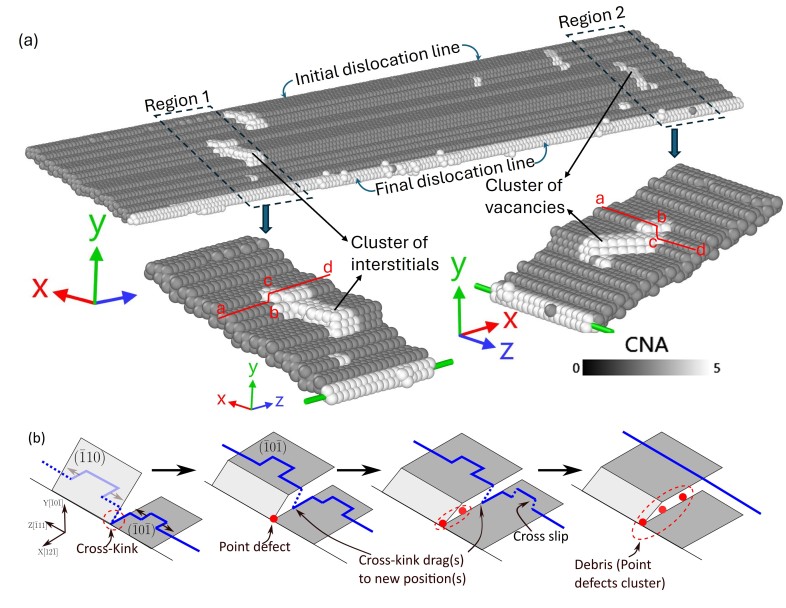
In the first project, the primary objective is to study the screw dislocation mobility in Refractory Complex Concentrated Alloys(RCCAs) and the effect of different alloying elements on the strengthening mechanism of such alloys. Once the strengthening mechanism is understood, a surrogate model will be developed to search for different alloy compositions for better strength and dislocation mobility-induced ductility at room temperature. At present, the focus is on elements in group 4(Ti), 5(Nb, Ta), and 6(Mo).
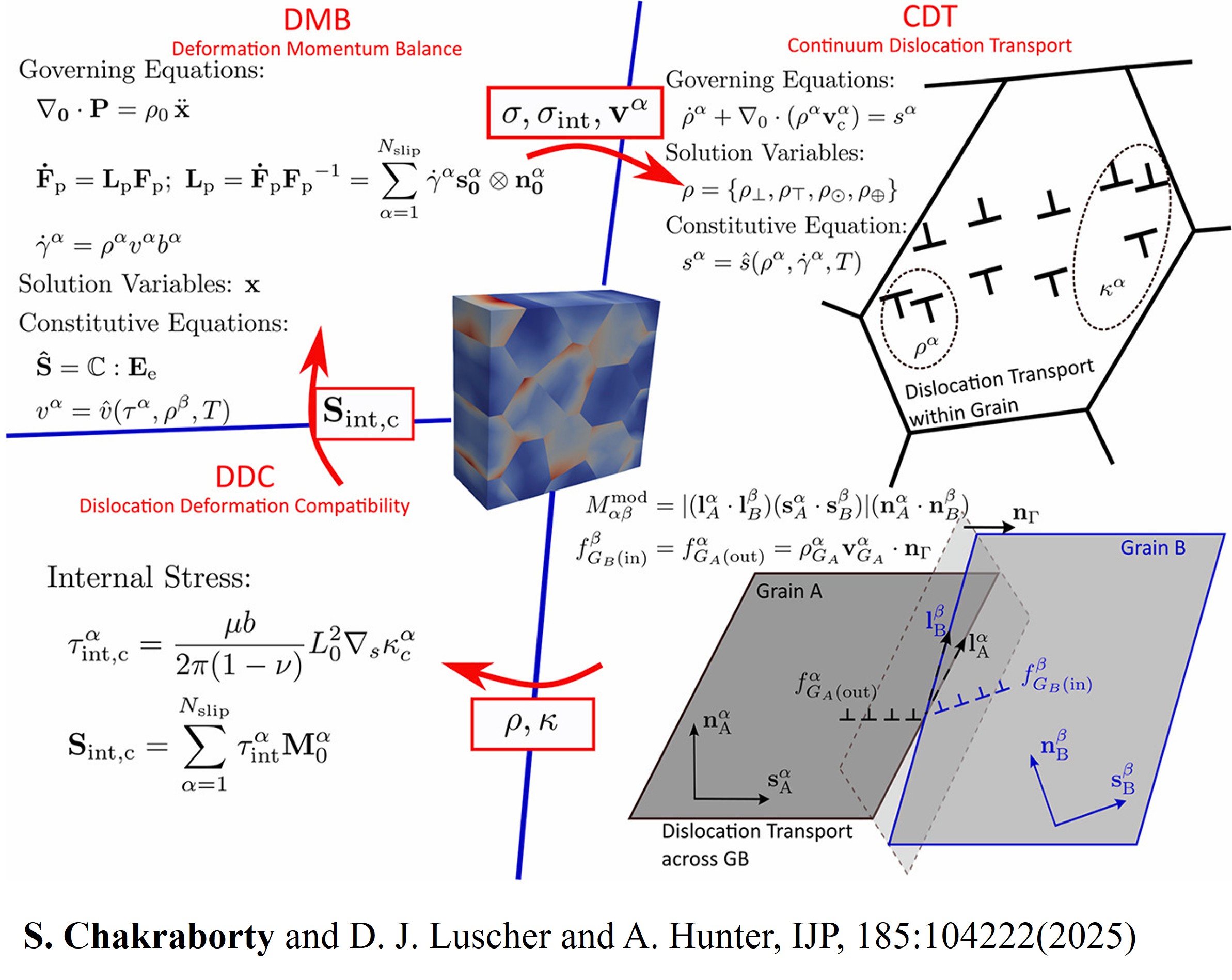
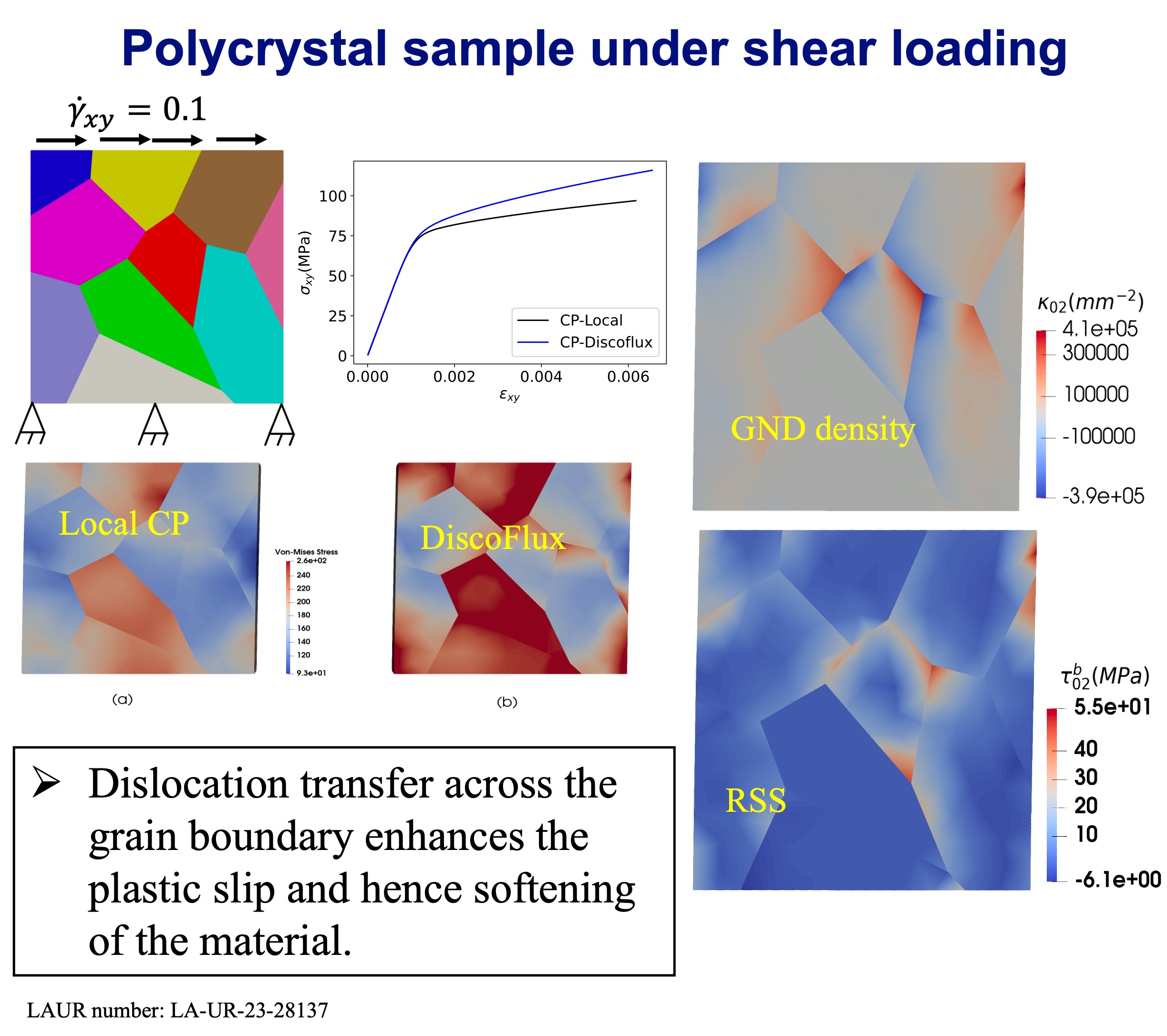
During my postdoc(2021-2024), at Los Alamos National Laboratory(LANL), I developed a dislocation transport-based crystal plasticity model that incorporates the dislocation transport within the grain and across the grain boundary. The model is useful to study the interaction of dislocations with grain boundary in polycrystalline materials and it’s macroscopic implication in the deformation behavior of the material. I have implemented the model into the open-source code MOOSE. The process involves developing crystal plasticity material class, different volumetric kernels, boundary kernels, interface kernels and auxkernels. Also some base-classes for array variables. The code is open-sourced and available in the LANL Github page with name DiscofluxM.
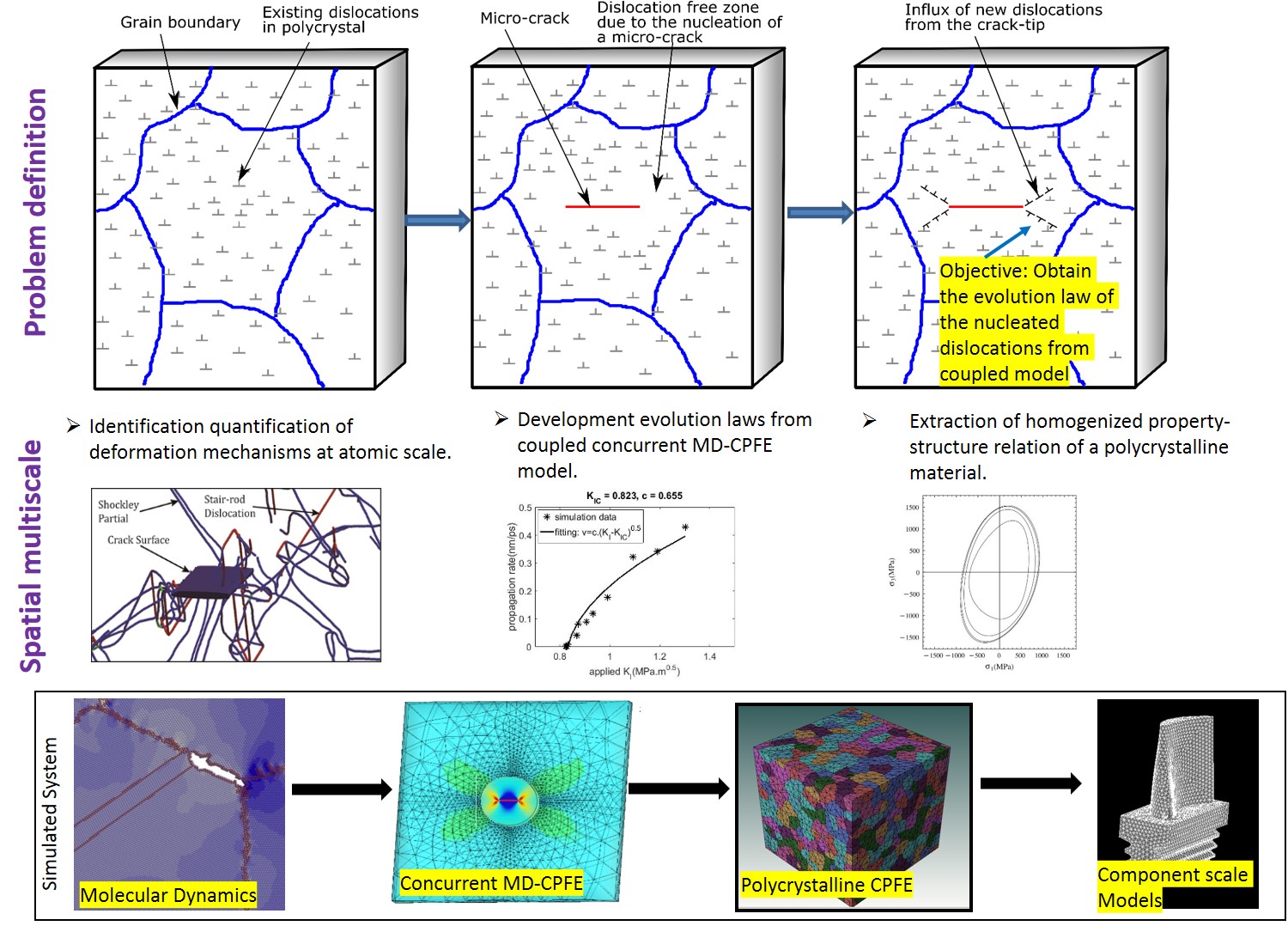
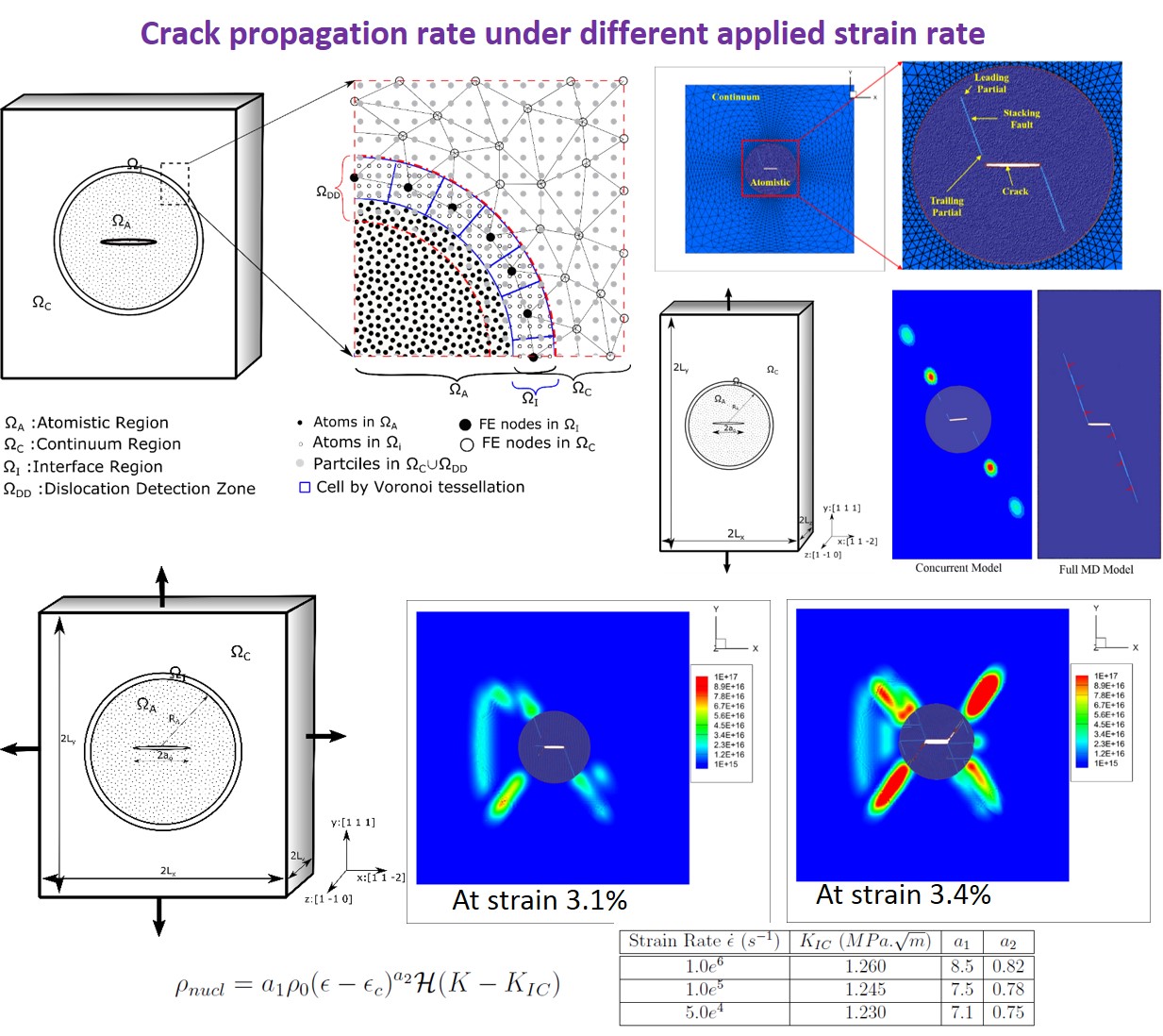
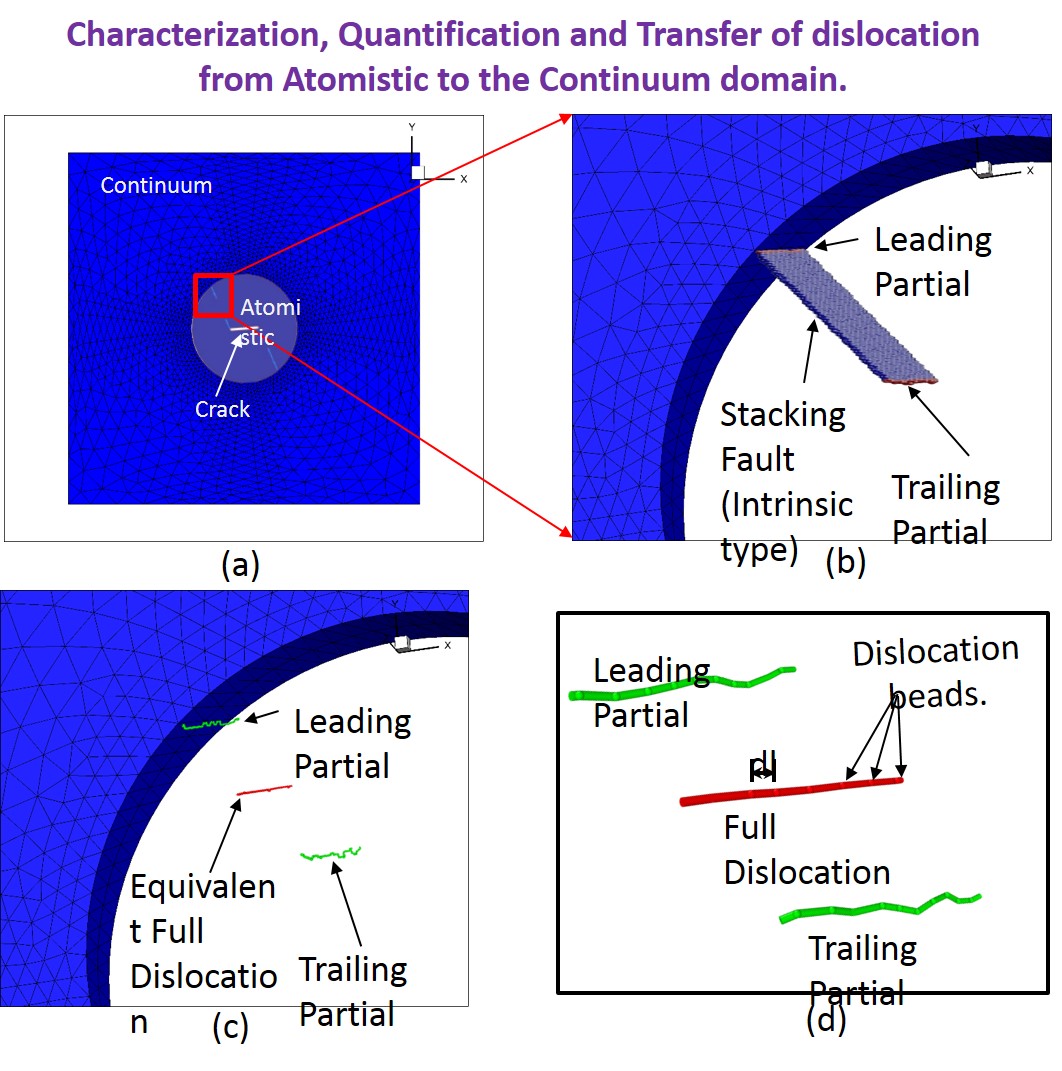
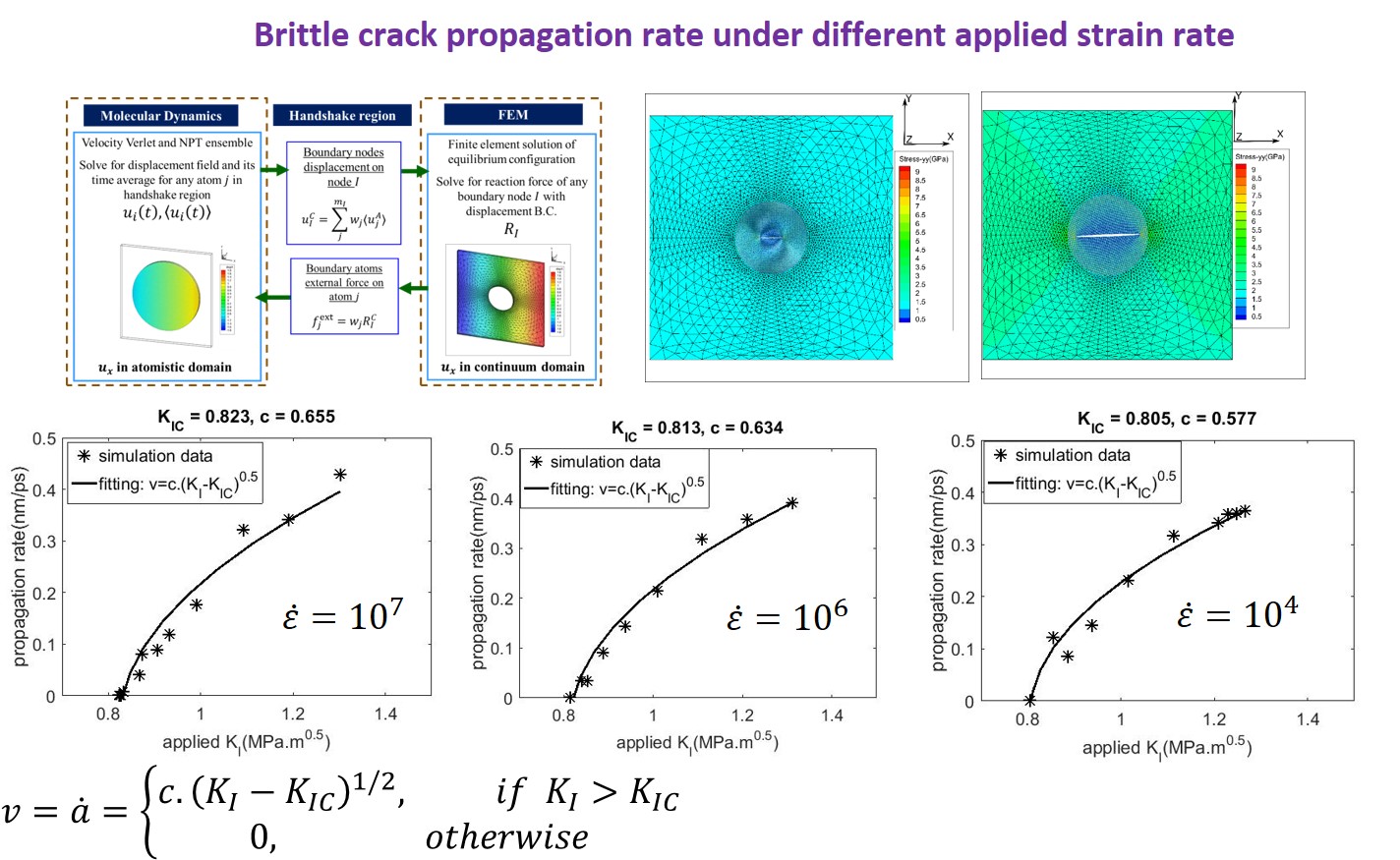
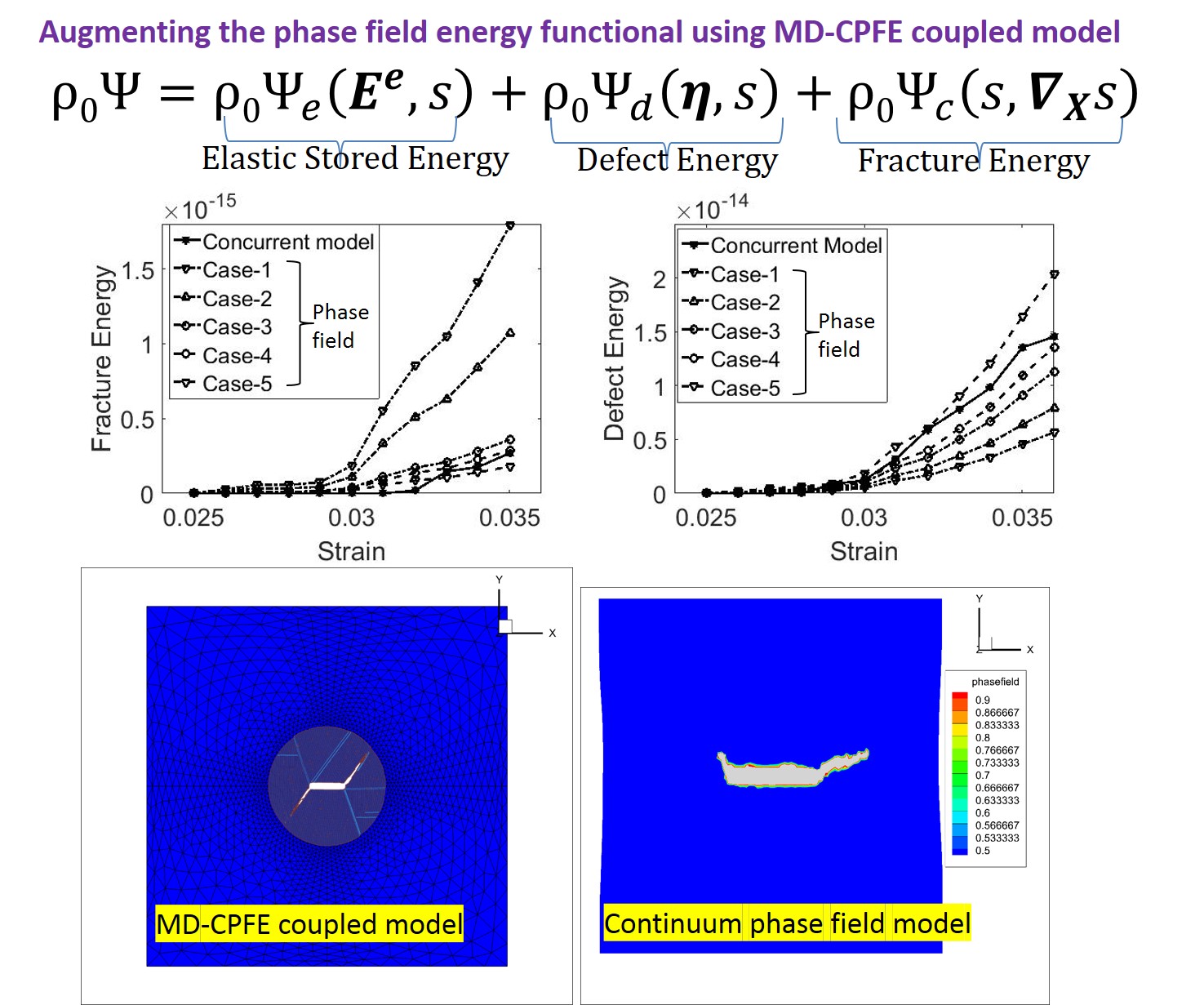
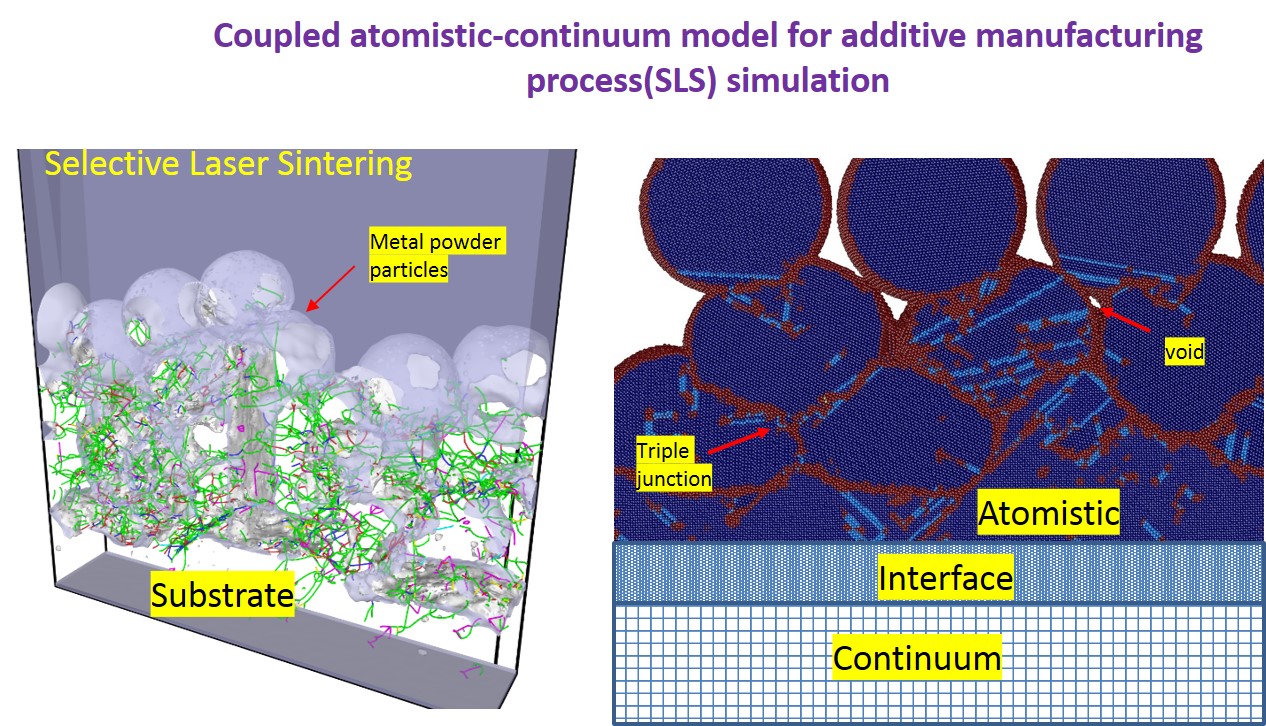
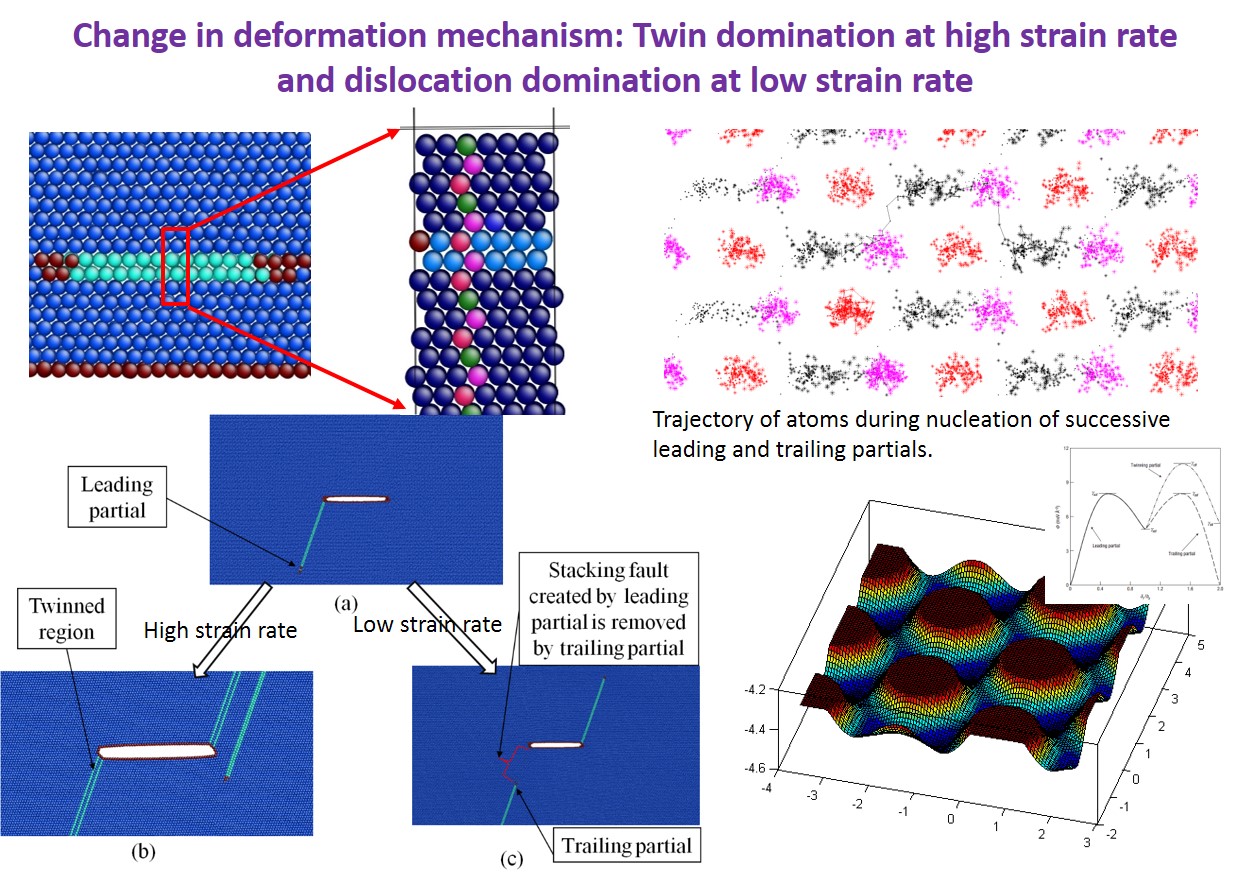
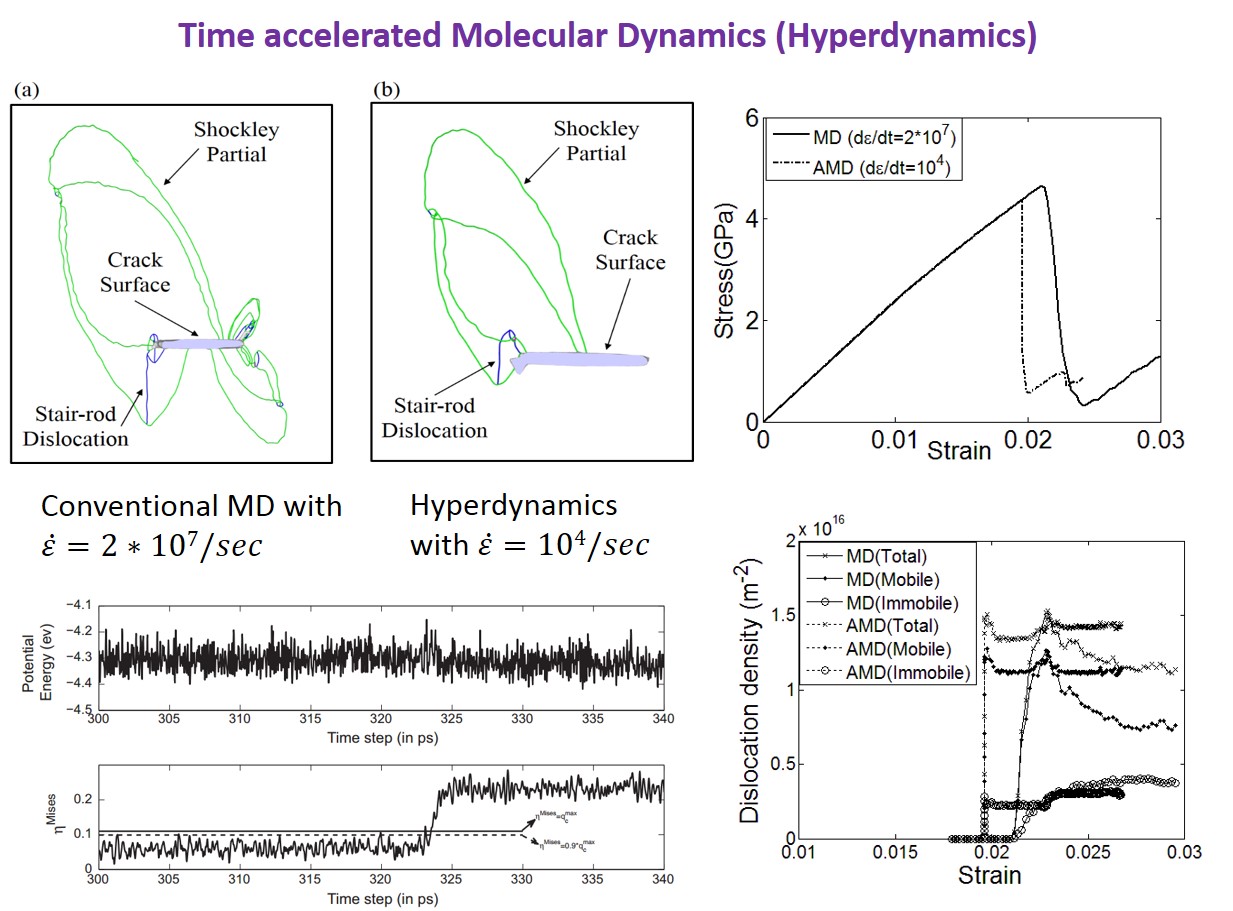
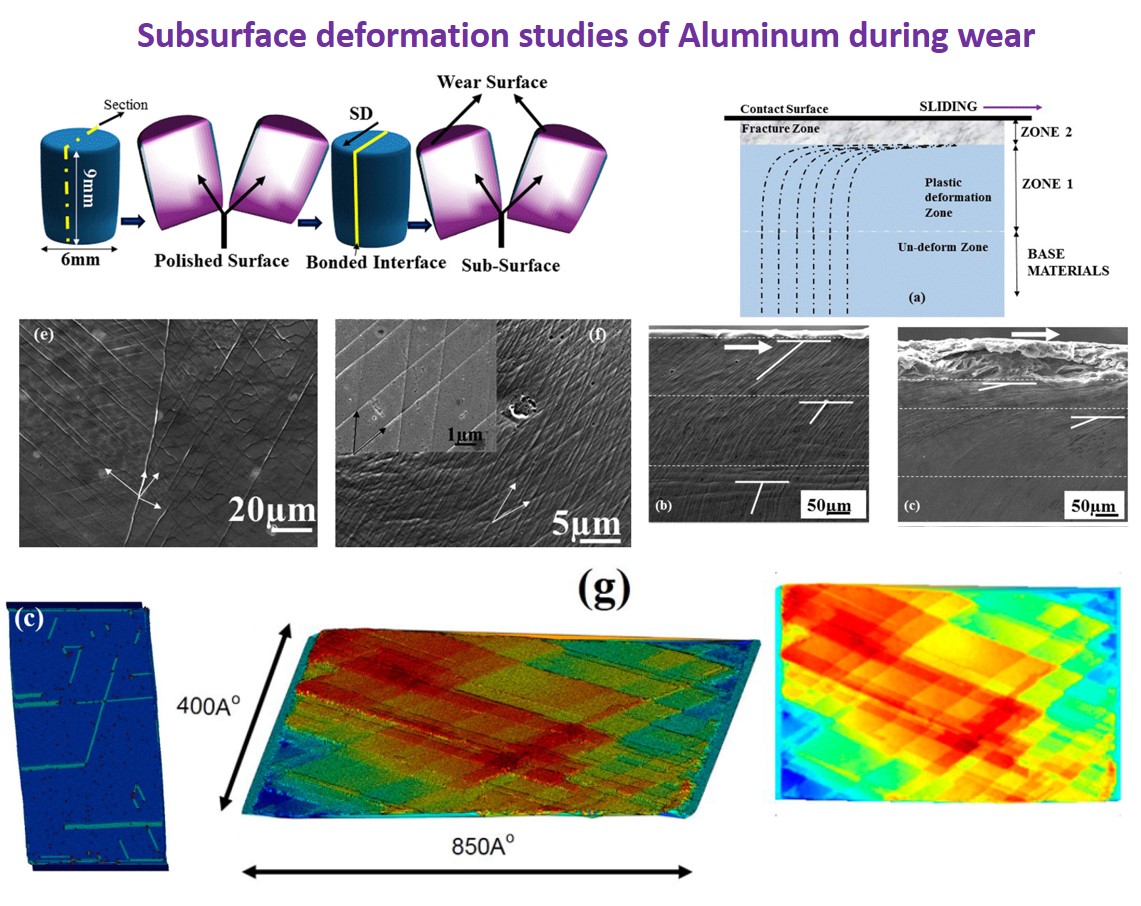
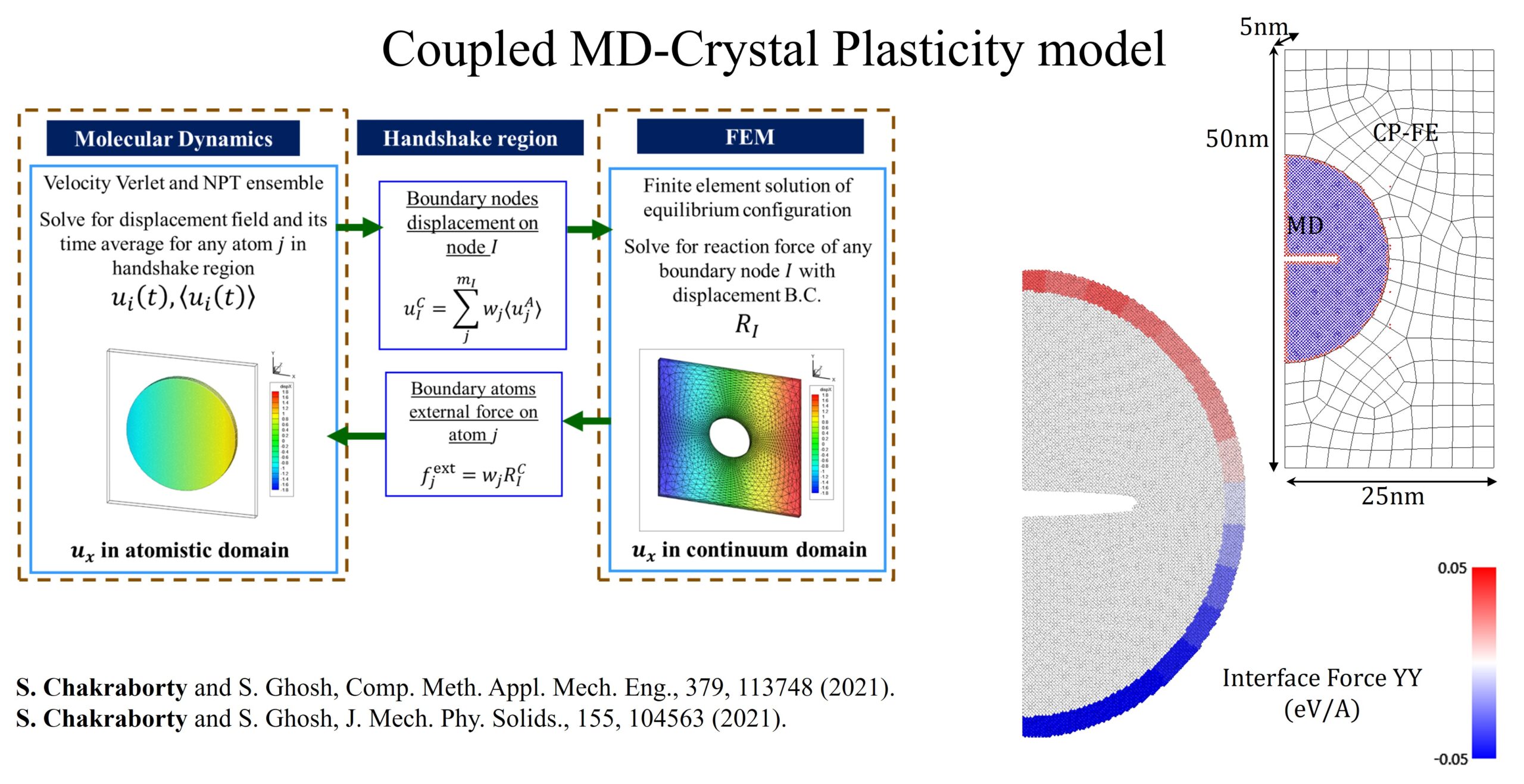
During my Ph.D., at the department of Mechanical Engineering of Johns Hopkins University, I have worked extensively in the realm of atomistic modeling of metallic materials using Accelerated Molecular Dynamics(Hyperdynamics). I have developed a concurrent multiscale model by coupling Molecular Dynamics(MD) with density-based Crystal Plasticity(CPFE) to extend the spatial scale of the atomistic model. For MD model, I have used LAMMPS and also incorporated new features into the LAMMPS for the time acceleration(Hyperdynamics) of the MD model.
Tags: Crystal Plasticity FE, MOOSE, Accelerated Molecular Dynamics(MD), LAMMPS, Alloy Design, High Entropy Alloys(HEAs), Refractory Complex Concentrated Alloys(RCCAs), Additive Manufacturing for Metals and Alloys, Defect Interaction, Phase Field, Meshless RKPM, XFEM.
**More in “My Research” page.